
The Complete Guide to French Drain Installation in Oklahoma City: Costs, Systems, and Clay Soil Solutions
Living in Central Oklahoma means enjoying wide-open skies, warm summers, and beautiful neighborhoods across Oklahoma City, Edmond, Norman, Yukon, and surrounding communities. However, it also means dealing with unpredictable weather—from sudden severe spring thunderstorms to heavy downpours that drop inches of rain in a matter of hours. If you step outside after a rainstorm and see standing water pooling in your yard, muddy trenches forming along your flower beds, or water seeping toward your home’s foundation, you are not alone.
Drainage issues are extremely common throughout Central Oklahoma due to our notorious local soil composition. Unmanaged runoff can cause significant damage to your lawn, destroy expensive landscaping, flood basements, and put immense hydrostatic pressure on slab foundations.
This comprehensive guide breaks down everything you need to know about yard drainage solutions okc, how subsurface water systems work, step-by-step cost expectations, material requirements, and how to protect your residential or commercial property from costly water damage.
Why Oklahoma City Properties Suffer From Severe Drainage Problems
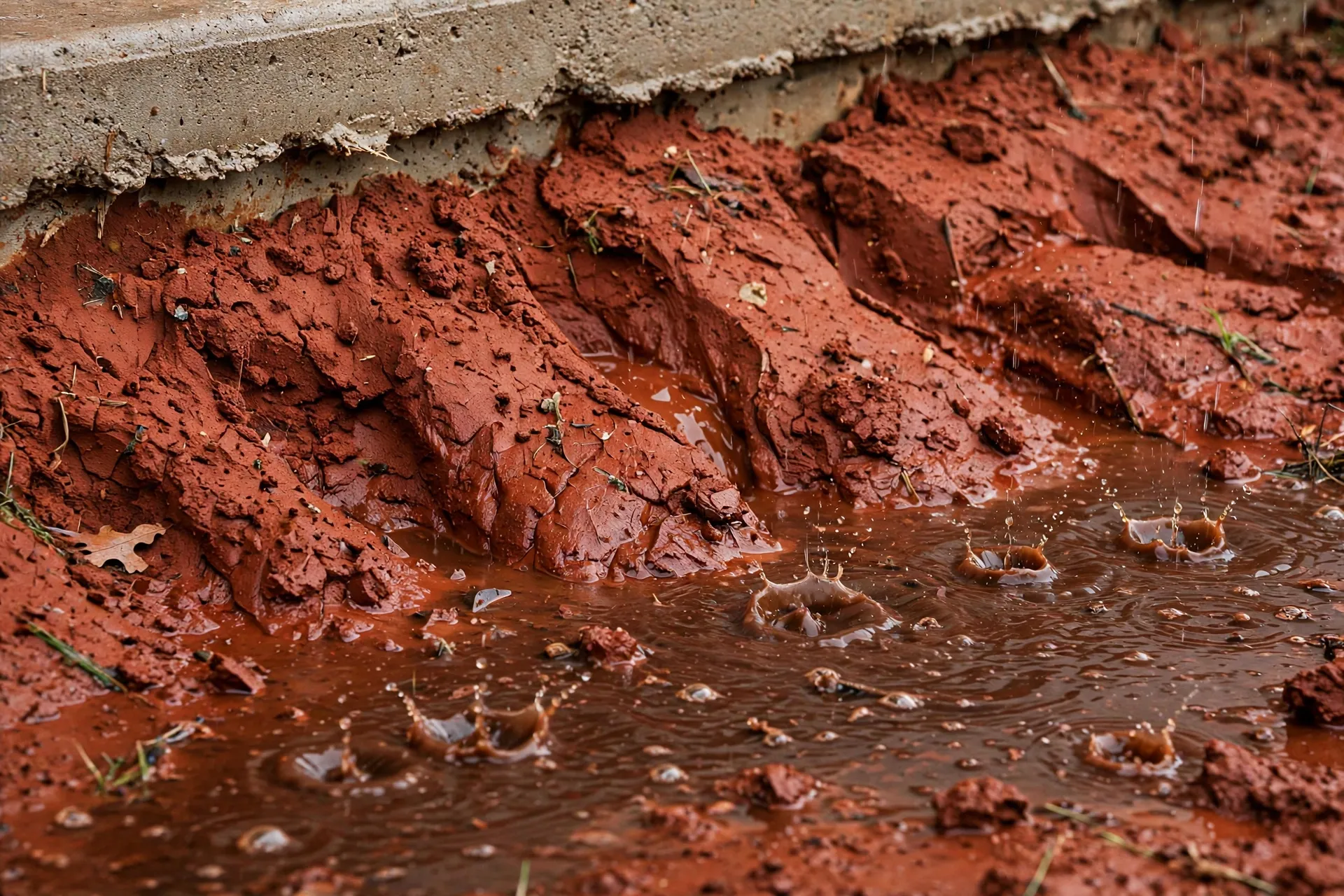
To understand why standing water persists on your lawn, you must look closely at what is happening beneath the turfgrass. Central Oklahoma sits atop dense, heavy Permian red clay soil. Unlike sandy or loamy soils found in other regions of the country, clay has extremely tight particles that absorb water at an painfully slow rate.
When heavy rain falls rapidly, the top layer of clay quickly reaches saturation. Once saturated, the ground acts almost like concrete, causing excess water to collect on the surface rather than soaking naturally into the earth.
Several common factors make yard flooding significantly worse across OKC homes:
Expansive Clay Soil: Expansive clay expands when wet and contracts when dry, putting pressure on foundation walls and preventing water absorption.
Flat Topography: Many subdivisions in Yukon, Mustang, and Midwest City feature very flat yards with less than a 1% natural slope.
Improper Lot Grading: Older properties often settle over decades, causing the lawn grade to slope toward the house rather than away from it.
Unchanneled Downspout Runoff: Roof downspouts dump hundreds of gallons of rainwater directly at the corners of home foundations, causing localized flooding and soil washouts.

Expansive Clay Soil: Expansive clay expands when wet and contracts when dry, putting pressure on foundation walls and preventing water absorption.
Flat Topography: Many subdivisions in Yukon, Mustang, and Midwest City feature very flat yards with less than a 1% natural slope.
Improper Lot Grading: Older properties often settle over decades, causing the lawn grade to slope toward the house rather than away from it.
Unchanneled Downspout Runoff: Roof downspouts dump hundreds of gallons of rainwater directly at the corners of home foundations, causing localized flooding and soil washouts.

What Is a French Drain and How Does It Work?
A lawn french drain is a subsurface water management system designed to capture underground ground water and direct it safely away from vulnerable structures. Named after Henry French, a Massachusetts judge and farmer who popularized the design in the 1850s, modern french drains okc rely on simple gravity and hydrostatic balance to move unwanted water.
To build an effective system that lasts for decades without clogging, specific materials are required:
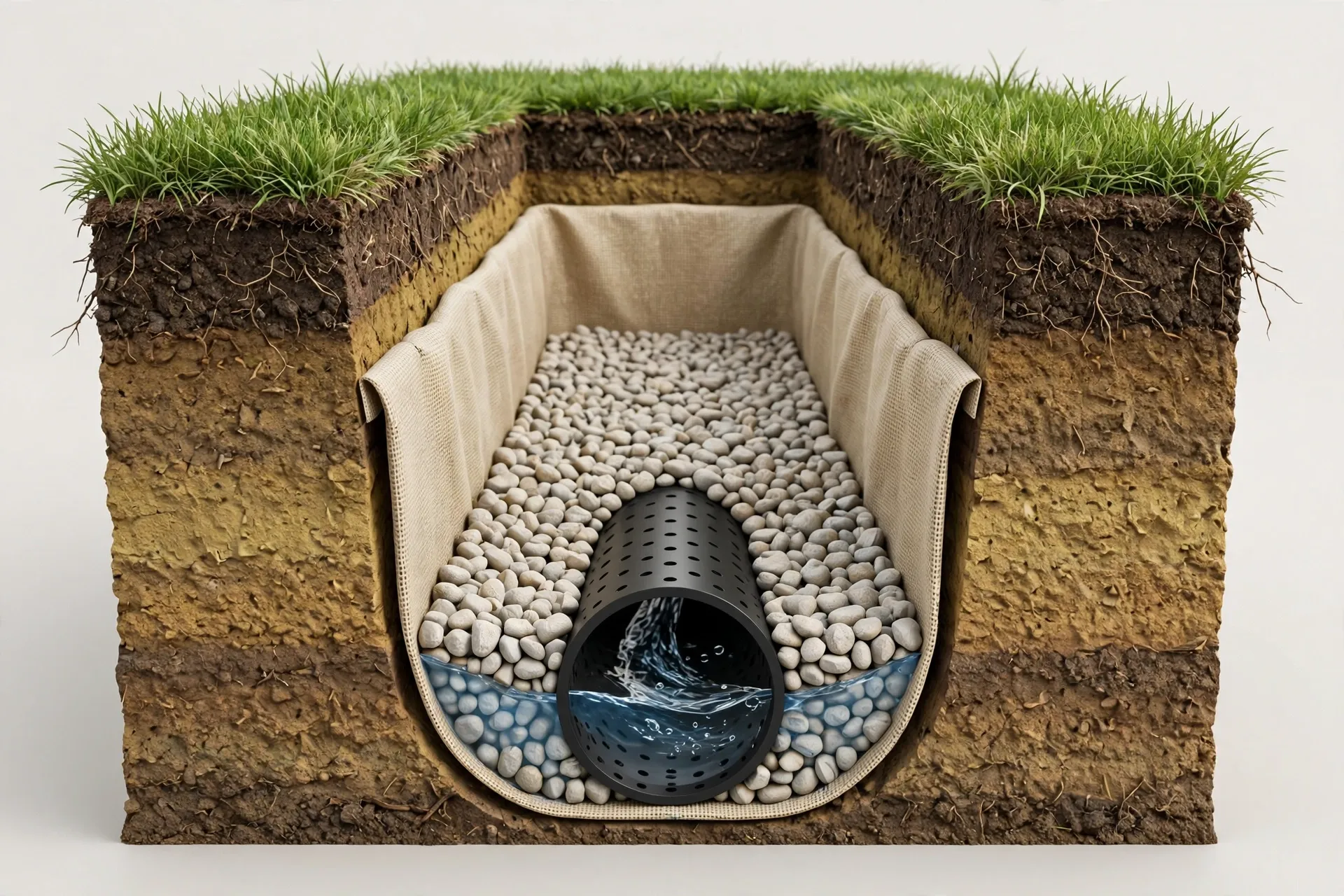
The Trench: Excavated into the lawn along the path where water naturally gathers or along a foundation wall.
Filter Fabric: High-grade non-woven landscape fabric french drain lining lines the trench. This fabric allows water to enter while blocking fine Oklahoma clay particles and root debris from invading the system.
Perforated Pipe: A perforated pipe for french drain installations sits at the bottom of the trench with the perforations (holes) facing downward. Water rises from below, enters the holes, and flows quickly along the smooth interior channel.
Washed Aggregate: Clean washed gravel or river rock surrounds the pipe. The gaps between gravel stones create an easy path for water to filter down quickly into the pipe.
Discharge Point: The pipe carries water safely to a pop-up emitter in the yard, a curbside street exit, or a drainage ditch.
The Trench: Excavated into the lawn along the path where water naturally gathers or along a foundation wall.
Filter Fabric: High-grade non-woven landscape fabric french drain lining lines the trench. This fabric allows water to enter while blocking fine Oklahoma clay particles and root debris from invading the system.
Perforated Pipe: A perforated pipe for french drain installations sits at the bottom of the trench with the perforations (holes) facing downward. Water rises from below, enters the holes, and flows quickly along the smooth interior channel.
Washed Aggregate: Clean washed gravel or river rock surrounds the pipe. The gaps between gravel stones create an easy path for water to filter down quickly into the pipe.
Discharge Point: The pipe carries water safely to a pop-up emitter in the yard, a curbside street exit, or a drainage ditch.

Comparing Drainage Options: French Drain, Area Drain, Channel Drain, and Swale
Not every wet yard requires the exact same solution. Experienced drainage contractors near me typically assess whether your property suffers from surface water runoff or subsurface ground water saturation before recommending a design.
System Type | Best Used For | Water Type Managed | Installation Depth |
French Drain | Soggy yards, ground water pooling near foundations, sub-surface seepage | Subsurface / Underground Ground Water | 18 to 24 Inches Deep |
Area Drain (Catch Basin) | Low spots in lawns, flower bed puddles, quick rainfall collection | Surface Water Runoff | 12 to 18 Inches Deep |
Channel Drain | Driveways, concrete patios, walkways, pool decks, garage doorways | Heavy Surface Sheet Water | Flush with Pavement |
Swale Drain | Large open acreage, property line borders, low-lying suburban lots | High-Volume Surface Flow | Shallow Surface Contour |
System Type
Best Used For
Water Type Managed
Installation Depth
French Drain
Soggy yards, ground water pooling near foundations, sub-surface seepage
Subsurface / Underground Ground Water
18 to 24 Inches Deep
Area Drain (Catch Basin)
Low spots in lawns, flower bed puddles, quick rainfall collection
Surface Water Runoff
12 to 18 Inches Deep
Channel Drain
Driveways, concrete patios, walkways, pool decks, garage doorways
Heavy Surface Sheet Water
Flush with Pavement
Swale Drain
Large open acreage, property line borders, low-lying suburban lots
High-Volume Surface Flow
Shallow Surface Contour
1. Swale Drain Installation Oklahoma City
A swale is a shallow, wide, vegetated ditch designed to channel high volumes of surface runoff gently across a property. Swale drains work exceptionally well along property lines between neighboring lots in suburban developments across Edmond and Yukon. They can be combined with a subsurface pipe to handle both surface flow and deep ground water simultaneously.
2. Area Drain Systems & Catch Basins
When you have a specific low spot on your lawn where water gathers instantly during a thunderstorm, an area drain installation near oklahoma city provides immediate relief. Grated catch basins sit level with your turf, collecting heavy surface water and immediately routing it through solid smooth-wall PVC piping to a safe discharge zone.
3. Channel Drain Systems
Driveways and concrete patios often act like dams, trapping water directly against garage doors or back porches. Installing channel drain systems okc involves cutting a narrow trench into existing concrete or laying channels during a new concrete pour. Long grates catch rainwater across the entire width of the paved surface, protecting indoor spaces from unexpected flash flooding.

Step-by-Step Breakdown: Professional French Drain Installation Process
Understanding how drainage solutions oklahoma city teams install these systems ensures you know what to expect when hiring professionals.
1.Property Assessment and Utility Line Staking: Mandatory safety check before digging.
Before any excavation begins, professional contractors locate and mark all underground utilities (gas, electric, fiber optics, water lines). Slopes are carefully measured using laser transit levels to verify that a continuous downward grade of at least 1 inch per 8 to 10 feet toward the discharge exit can be maintained.
2.Trenching and Soil Excavation: Depth varies from 18 to 24 inches.
Using specialized trenchers or mini-excavators, crews dig a clean 10 to 12-inch wide trench. Excavated heavy Oklahoma red clay is moved offsite or set aside for lot regrading. The trench bottom is hand-shoveled and smoothed to maintain a precise downward slope.
3.Lining the Trench with Heavy-Duty Filter Fabric: Critical step to prevent clay clogging.
A high-durability, non-woven landscape fabric for french drain lining is laid along the length of the trench. Wide overhang margins are left on both sides so the fabric can be wrapped over the gravel aggregate layer later, fully enveloping the system.
4.Setting Gravel Base and Perforated Pipe: Holes must face downward toward the bedding.
A 2-to-3-inch base layer of washed river rock is poured into the lined trench. A rigid perforated french drain pipe (such as Schedule 40 or heavy dual-wall smooth-interior pipe) is lowered into place with holes pointing downward. Pointing holes downward allows ground water to rise from the bottom, entering the pipe smoothly without clogging.
5.Backfilling Aggregate and Fabric Enclosure: Creating the ultimate filtration system.
Washed gravel is poured over the pipe until it reaches within 4 to 6 inches of the surface. The overlapping sides of the french drain cloth are folded tightly over the top of the gravel layer. This envelope protects the system, ensuring mud and organic silt cannot enter the gravel bed.
6.Topsoil Refill, Sod Replacement, and Testing: Restoring lawn aesthetics and verifying flow.
Topsoil is added over the wrapped fabric and compacted gently. Turfgrass or sod is replaced across the trench line. Water is flushed through the system to confirm smooth flow, ensuring the pop-up emitter or curb discharge functions cleanly.
Cost Guide: How Much Does French Drain Installation Cost in OKC?
Understanding french drain installation costs helps you plan your home improvement budget accurately. On average, residential french drain cost per foot in Oklahoma City ranges from $25 to $60+ per linear foot, depending on depth, accessibility, and material quality.
Key Factors Affecting Your Overall Price
Total Linear Feet: Larger properties requiring extensive piping through front and back yards naturally require more labor, excavation time, and materials.
Soil Conditions and Root Obstructions: Digging through soft topsoil is fast, whereas digging through compacted clay, tree roots, or rock ledges increases labor time.
Pipe and Fabric Quality: High-grade rigid PVC pipe costs slightly more up front than thin flexible corrugated pipe, but offers superior long-term durability and resistance to crushing under lawn tractors.
Surface Disruption Restoration: Trenching through existing concrete patios, asphalt driveways, or elaborate hardscape features requires specialized saws and concrete repair work, which adds to total project labor.
Basement Waterproofing & Crawlspace Moisture Control in Central Oklahoma
While surface yard flooding is obvious to spot, hidden subsurface ground water can wreak havoc beneath your home’s living areas. When clay soil becomes super-saturated during seasonal storms, it exerts immense hydrostatic pressure against subterranean concrete basement walls and crawlspace stem walls.
Exterior vs. Interior Basement French Drains
For homeowners in older OKC neighborhoods or established Norman and Edmond properties with basements, managing water requires targeted intervention:
Exterior Basement Drains: Installed around the outer perimeter of the foundation footings during construction or deep excavation. It captures ground water before it ever touches foundation walls.
Interior Basement French Drains: Installed by removing a narrow strip of concrete floor slab along interior basement walls. A perforated drain line collects intruding water seepage and routes it directly to a reliable sump pump system. The sump pump then safely discharges the water out and away from the home’s foundation.
Pairing subsurface drainage with professional basement waterproofing oklahoma city services protects your home’s structural stability and preserves indoor air quality.
Can You DIY a French Drain in Oklahoma City?
Many homeowners consider taking on a diy french drain project over a weekend to save on labor costs. While installing a small, shallow downspout extension can be a rewarding DIY task, larger yard drainage projects in Oklahoma City present steep challenges:
Physical Labor in Dense Clay: Excavating 50 to 100 feet of trench 20 inches deep in solid Oklahoma red clay using hand shovels requires backbreaking physical labor.
Maintaining Precise Grade Pitch: Without professional optical laser levels, it is very easy to dig a trench that goes slightly uphill or stays level, causing standing water to sit inside the pipe rather than draining out.
Choosing Wrong Materials: DIY installations frequently use cheap perforated corrugated pipe wrapped in thin sock fabric without gravel bedding. Within 12 to 24 months, silt and clay clog the system, rendering it completely useless.
Utility Conflicts: Digging without proper municipal utility marking can result in severed electrical lines, gas leaks, or cut internet cables, leading to dangerous situations and expensive repairs.
Working with experienced landscape drainage experts okc ensures correct trench pitch, high-performance geotextile wrapping, and long-term warranties.
Frequently Asked Questions About Yard Drainage Keywords & Systems
What is the best pipe material for a French drain in Oklahoma?
Rigid smooth-wall PVC (Schedule 40 or ASTM D2729) or heavy dual-wall smooth-interior corrugated pipe is ideal. Rigid pipes resist crushing under heavy lawn equipment, stay straight during trench backfilling, and allow easy root-rooting or hydro-jetting if maintenance is ever needed.
How deep should a French drain be in Central Oklahoma?
Standard residential yard drains should be excavated between 18 to 24 inches deep and approximately 10 to 12 inches wide. Deep foundation drains positioned alongside basements or crawlspaces may need to go 4 to 8 feet down to reach footings.
Do I really need filter fabric for my French drain?
Yes! Non-woven geotextile landscape fabric french drain wrapping is mandatory. Without high-quality filter fabric surrounding the gravel bed, Oklahoma’s fine red clay particles will quickly wash into the rock spaces, clogging the system within a couple of years.
How long does a professionally installed French drain last?
When installed using rigid perforated PVC, washed river rock, and premium non-woven geotextile fabric, a subsurface drainage system can easily last 30 to 50+ years with minimal maintenance.
Frequently Asked Questions About OKC Drainage Pros
What service areas does OKC Drainage Pros cover?
OKC Drainage Pros proudly serves the entire Oklahoma City metropolitan area, including Edmond, Norman, Yukon, Mustang, Moore, Midwest City, Del City, Choctaw, Harrah, Tuttle, Blanchard, and Bethany.
Do you offer free property evaluations and project estimates?
Yes! We provide on-site drainage evaluations for residential homeowners and commercial property managers. Our team analyzes your slope, soil conditions, downspout locations, and water flow patterns to design a custom solution.
What types of drainage systems do you specialize in?
We install comprehensive property solutions including subsurface French drains, surface catch basins and area drains, heavy-duty channel drains for driveways and patios, custom swales, downspout burial lines, lot grading, and sump pump setups.
Are your drainage solutions backed by warranties?
Absolutely. We take pride in our workmanship and utilize professional-grade materials designed for Central Oklahoma soil. All our new drainage system installations come with solid labor and material warranties.
About OKC Drainage Pros: Oklahoma’s Water Management Experts
At OKC Drainage Pros, we are dedicated to protecting residential homes and commercial structures from the destructive forces of standing water, structural erosion, and foundation movement. Founded by local Central Oklahoma drainage specialists with years of hands-on experience in excavation, civil grading, and landscape architecture, our team understands the exact challenges posed by local red clay soil and severe weather events.
We treat every property as if it were our own. By utilizing precise optical laser levels, heavy-duty commercial-grade materials, and non-woven filtration systems, we deliver drainage solutions that protect your property value and keep your lawn dry year-round. Whether you need a simple downspout line extension or a complex full-yard French drain and sump system, our local specialists are ready to help.
Protect Your Property with Reliable Drainage Solutions Today
Ignoring standing water in your yard or minor water seepage around your foundation wall often leads to major headaches—and thousands of dollars in structural foundation repairs down the road. By taking proactive steps to correct poor grading, redirect downspout runoff, and install a custom subsurface French drain or catch basin system, you preserve your lawn, safeguard your family’s health, and protect your largest financial investment.
Don’t let another heavy thunderstorm flood your back patio or turn your yard into a muddy swamp. Contact the experienced team at OKC Drainage Pros today to schedule your comprehensive on-site drainage consultation and take the first step toward a safer, dry property!